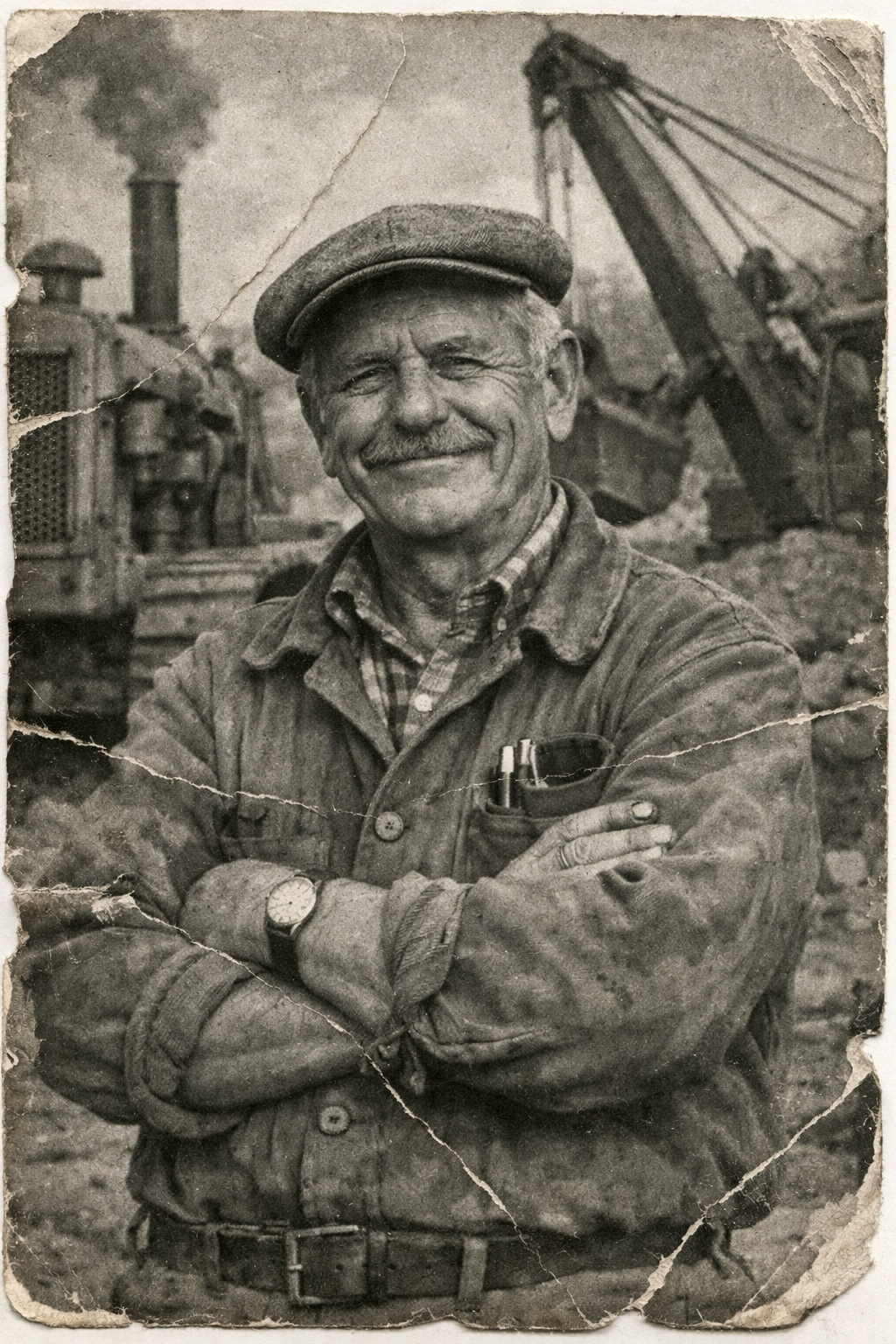
Rob Reliability didn't come out of a branding workshop. It's named after Robert – and the story goes back a lot further than software.
Long before "reliability engineering" was a job title, my grandfather Robert ran a company in France built around heavy machines – crawler excavators, tracked diggers, the kind of earthmoving iron you'd recognise as Liebherr-class equipment.
Those machines were his livelihood, so he refused to let them fail in the middle of a job. He listened to them. He noted what wore out, and when. He greased, inspected and overhauled on a rhythm – swapping parts before they broke, not after. He kept his own logs, his own intervals, his own gut-feel failure curves decades before anyone formalised one.
Today we'd call that preventive maintenance, condition monitoring, reliability-centred thinking. Back then it was just Robert, refusing to be caught out – doing it before it was a discipline, quietly, on the ground, where it actually counts.
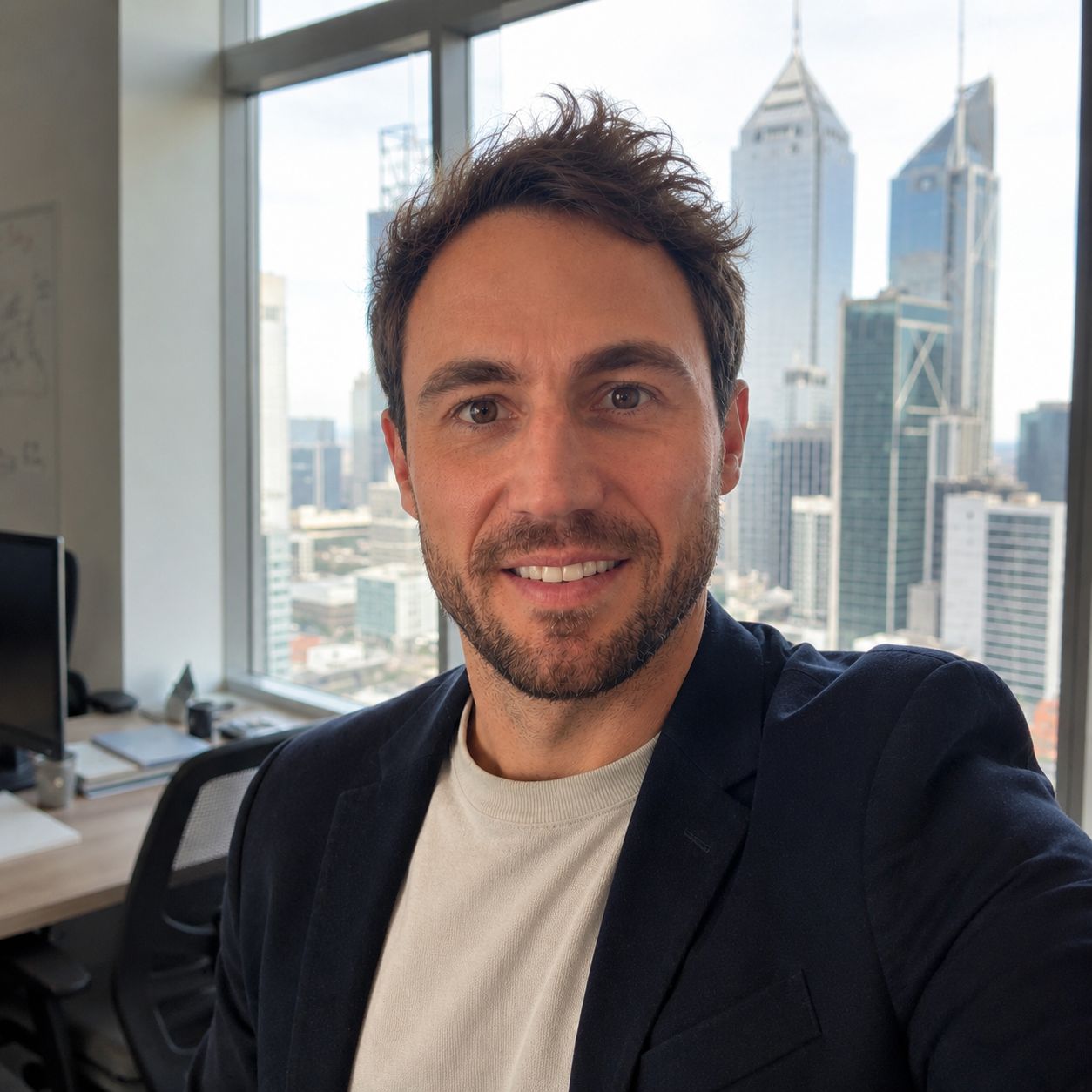
I'm Joss – Robert's grandson, and the founder of Rob Reliability. When it came time to name this, there was never really a shortlist. Naming it after him was personal: a way of carrying forward the instinct he had for keeping machines alive.
I've spent 15+ years in industrial reliability – out on site with the equipment and in the engineering office – across heavy industry. Along the way I became genuinely obsessed with automation and with leveraging AI: I love turning the slow, repetitive parts of the job into tools that just do the work, so the engineering brainpower goes where it actually matters. And I don't do this alone: at Rob Reliability I build alongside other major players in industrial reliability around the world, so what we ship is backed by real field experience, not a slide deck.
And here's the part I still find strange. Years later, on the other side of the world in Australia, the man who became my mentor in reliability engineering – the one who taught me the formal craft Robert practised by feel – was also named Robert. He's retired now, but he shaped how I think about failure, data and field work. The name kept finding me.
Honestly? It started as frustration. I was spending most of my weeks buried in documentation, wrestling Excel, and stitching data together by hand – when that time should have gone into actual reliability engineering. It's the same admin grind that swallows every reliability team I've ever worked with.
Then AI changed what's possible. The studies that used to eat weeks can be drafted in days, with more consistency and more time left to verify the results. The possibilities are enormous – and that's exactly the point: a gap is opening between the teams who put AI to work on reliability and the ones who don't. Rob Reliability exists to put my clients firmly on the right side of that gap.
What I do now is the same job Robert did in the dirt – keep critical equipment running, and catch failures before they happen. Today that means showing up for clients as reliability engineers – on-site or remote – on the studies they'd normally outsource: RCM, RCA, ECA, FMECA, Weibull. Only the tools have changed. Where Robert kept paper logs, we lean on AI to do the heavy lifting, and where it helps we build custom tools around a client's own assets in weeks.
The technology is modern. The principle is his: don't sell anything that won't actually hold up on the ground. Because AI handles the grind, we spend our time verifying – every output still gets reviewed by a human who knows what a real failure looks like. No fluff, no demo-ware – just reliability, carried forward.
Book a 30-minute call, or explore the solutions. Same promise Robert worked by: if it won't deliver on the ground, we'll tell you.